Umrah guide
How to perform Umrah, step by step
ʿUmrah is the lesser pilgrimage to Makkah. It takes only a few hours and can be performed at any time of the year. Each rite below shows you what to do, how to get it right, and what to say, with the Arabic, how to pronounce it, and what it means.
What this guide covers
- 9 rites, in the order you perform them
- Arabic · pronunciation · meaning for every supplication
- About 3–6 hours to perform, depending on crowds
This is a simple, general guide to ʿUmrah as commonly taught in the Sunni tradition. Small details differ between the schools of thought. For anything you are unsure about, ask a knowledgeable scholar or your group leader before you travel.
The rites of Umrah
Follow these rites in order. Each one shows what to do, the details that matter, and the words to say, with the Arabic, how to pronounce it, and what it means.
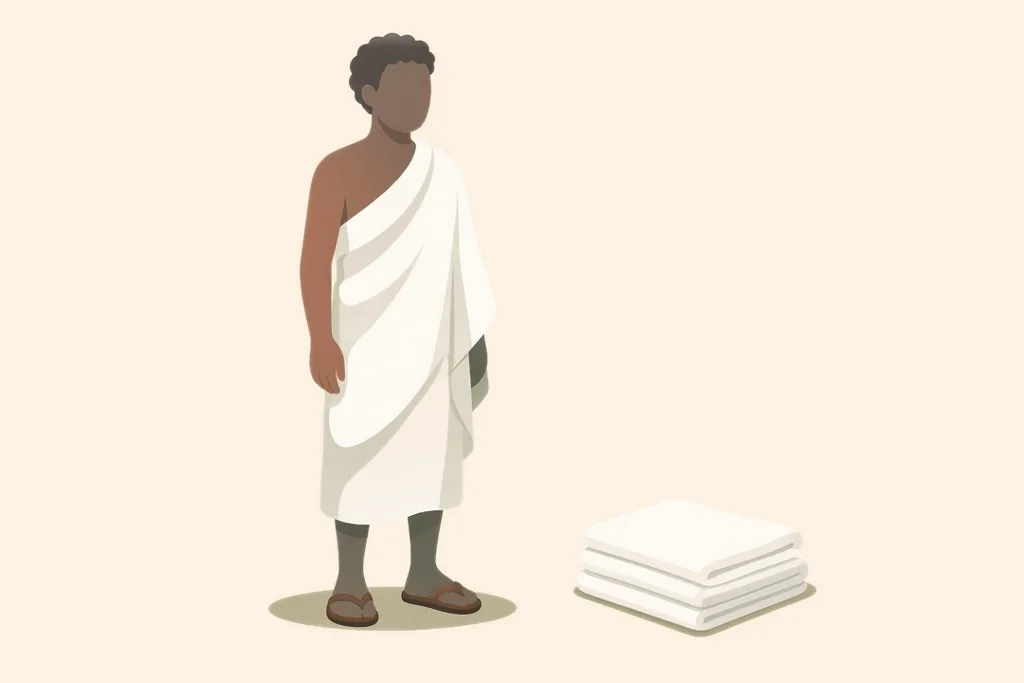 Step 1 of 9
Enter iḥrām and make the intention
Before passing the mīqāt (the boundary for pilgrims), bathe, put on the clothing of iḥrām, and make the intention (niyyah) in your heart to perform ʿUmrah. From this moment the restrictions of iḥrām apply.
Get it right- Take a full bath (ghusl) if you can, and remove unwanted hair and trim the nails beforehand. Perfume may be applied to the body, not to the iḥrām clothing.
- Men wear two plain, unstitched white sheets: one wrapped around the waist and one over the shoulders, with the head uncovered and sandals that leave the ankles visible.
- Women wear ordinary modest clothing of any colour, without a face veil (niqāb) or gloves.
Show 2 moreShow less
- Make the intention for ʿUmrah in your heart at or before the mīqāt; if travelling by air, do this before the plane crosses it.
- While in iḥrām, avoid perfume, cutting hair or nails, hunting, marital relations, and arguing; men also avoid stitched clothing and covering the head.
Say thisلَبَّيْكَ اللَّهُمَّ عُمْرَةً
How to say itLabbayka Allāhumma ʿumratan
Meaning“Here I am, O Allah, for ʿUmrah.”
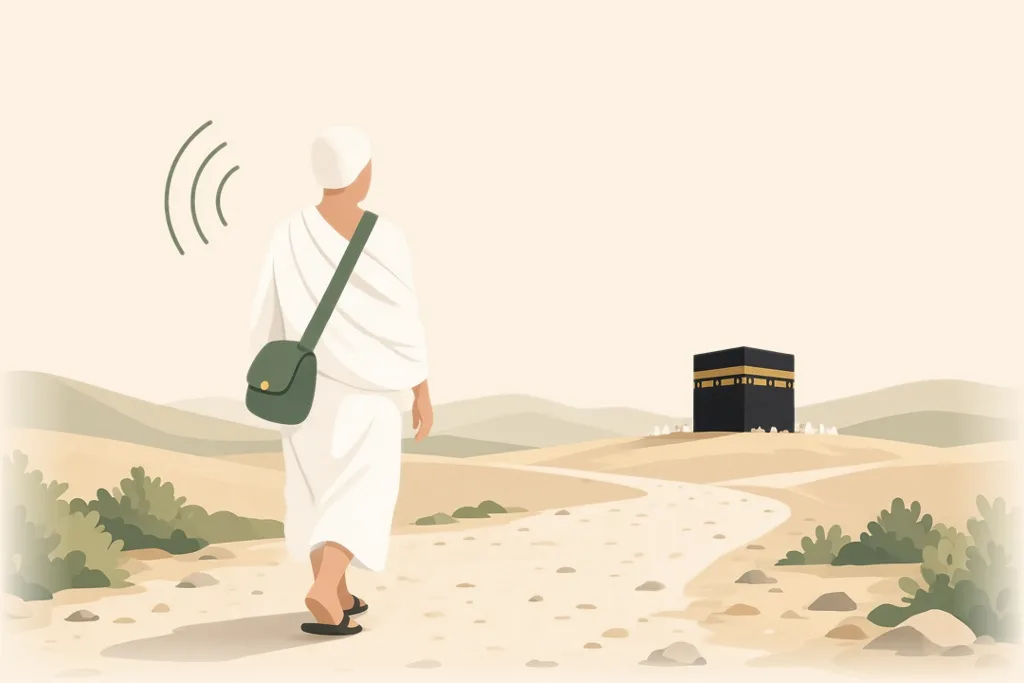 Step 2 of 9
Recite the Talbiyah
After making the intention, begin reciting the Talbiyah, the pilgrim's answer to the call of Allah. Keep repeating it often on the way to Makkah until you begin the ṭawāf.
Get it right- Men recite it aloud; women recite it so that only they, or those right beside them, can hear.
- Repeat it frequently, especially when climbing, descending, or meeting other people.
- Stop reciting the Talbiyah when you reach the Kaʿbah and are about to start the ṭawāf.
Show 1 moreShow less
- Between recitations, fill your time with dhikr, duʿāʾ, and asking Allah for forgiveness.
Say thisلَبَّيْكَ اللَّهُمَّ لَبَّيْكَ، لَبَّيْكَ لَا شَرِيكَ لَكَ لَبَّيْكَ، إِنَّ الْحَمْدَ وَالنِّعْمَةَ لَكَ وَالْمُلْكَ، لَا شَرِيكَ لَكَ
How to say itLabbayka Allāhumma labbayk, labbayka lā sharīka laka labbayk, inna al-ḥamda wan-niʿmata laka wal-mulk, lā sharīka lak
Meaning“Here I am, O Allah, here I am. Here I am, You have no partner, here I am. Truly all praise, all blessings, and all sovereignty are Yours. You have no partner.”
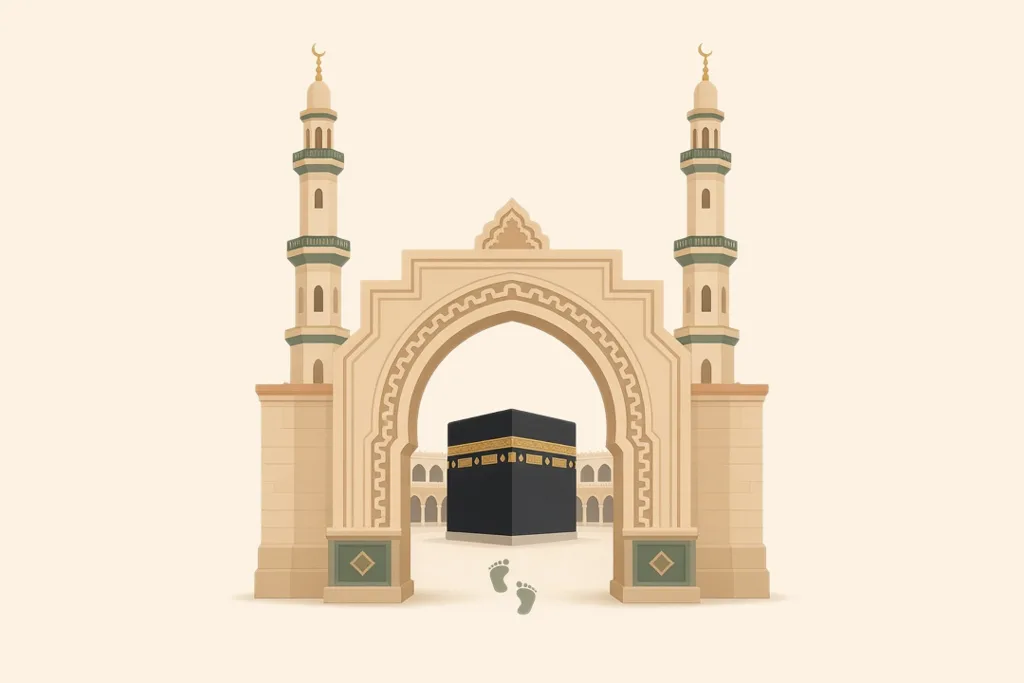 Step 3 of 9
Enter Masjid al-Ḥarām
Enter the Sacred Mosque with your right foot first, in a state of wuḍūʾ, and say the supplication for entering the mosque. Then make your way calmly towards the Kaʿbah.
Get it right- Make sure you have wuḍūʾ: it is required for the ṭawāf.
- Step in with the right foot first and say the supplication for entering a mosque.
- When you first see the Kaʿbah, raise your hands and make any duʿāʾ you wish.
Say thisبِسْمِ اللَّهِ وَالصَّلَاةُ وَالسَّلَامُ عَلَى رَسُولِ اللَّهِ، اللَّهُمَّ افْتَحْ لِي أَبْوَابَ رَحْمَتِكَ
How to say itBismillāhi waṣ-ṣalātu was-salāmu ʿalā Rasūlillāh, Allāhumma iftaḥ lī abwāba raḥmatik
Meaning“In the name of Allah, and peace and blessings be upon the Messenger of Allah. O Allah, open for me the gates of Your mercy.”
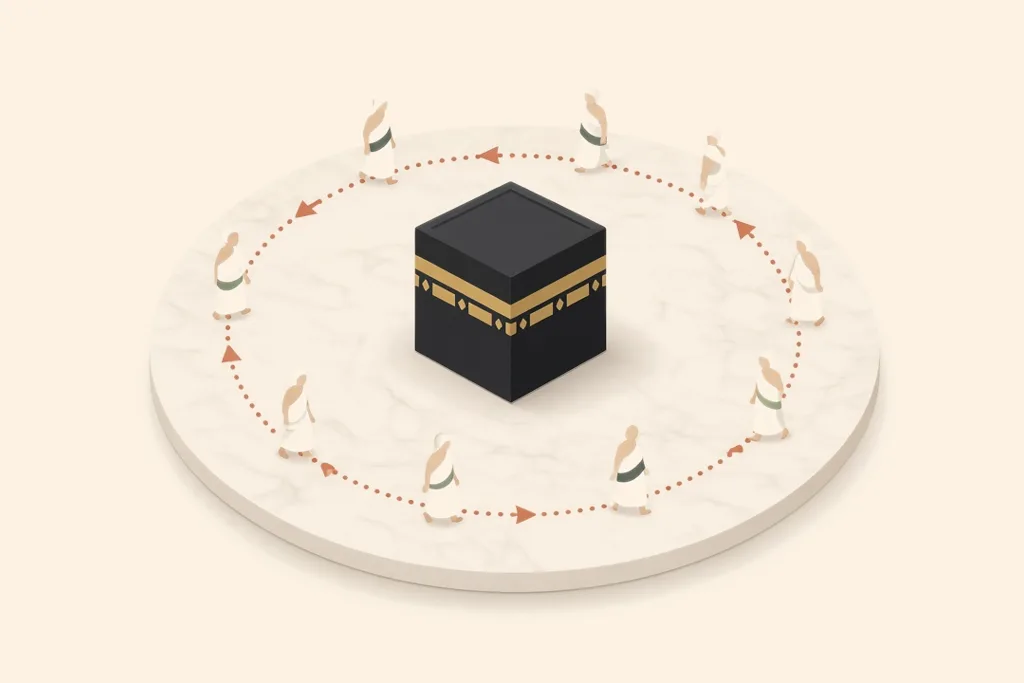 Step 4 of 9
Perform ṭawāf: seven circuits around the Kaʿbah
Walk around the Kaʿbah seven times, anticlockwise, keeping it on your left. Each circuit starts and ends at the corner of the Black Stone (al-Ḥajar al-Aswad).
Get it right- Men uncover the right shoulder (iḍṭibāʿ) by passing the upper sheet under the right arm, for the whole ṭawāf only.
- Start at the Black Stone, in line with the green light on the wall. Face it, and kiss or touch it if you can; otherwise raise your right hand towards it from a distance.
- Say “Bismillāh, Allāhu akbar” at the start, and “Allāhu akbar” each time you pass the Black Stone again.
Show 4 moreShow less
- In the first three circuits men walk briskly with short steps (ramal) where possible; the remaining four are walked at a normal pace.
- Touch the Yemeni Corner with your right hand if it is easy, without kissing it; if not, simply pass it without gesturing.
- Between the Yemeni Corner and the Black Stone, recite “Rabbanā ātinā…”. There is no fixed duʿāʾ for each circuit: make any duʿāʾ or dhikr, in any language.
- Keep count: after the seventh circuit ends at the Black Stone, the ṭawāf is complete. Men then cover the right shoulder again.
Say thisبِسْمِ اللَّهِ، وَاللَّهُ أَكْبَرُ
How to say itBismillāh, wallāhu akbar
Meaning“In the name of Allah, and Allah is the Greatest.”
Say thisرَبَّنَا آتِنَا فِي الدُّنْيَا حَسَنَةً وَفِي الْآخِرَةِ حَسَنَةً وَقِنَا عَذَابَ النَّارِ
How to say itRabbanā ātinā fid-dunyā ḥasanatan wa fil-ākhirati ḥasanatan wa qinā ʿadhāban-nār
Meaning“Our Lord, give us good in this world and good in the Hereafter, and protect us from the punishment of the Fire. (Quran 2:201)”
 Step 5 of 9
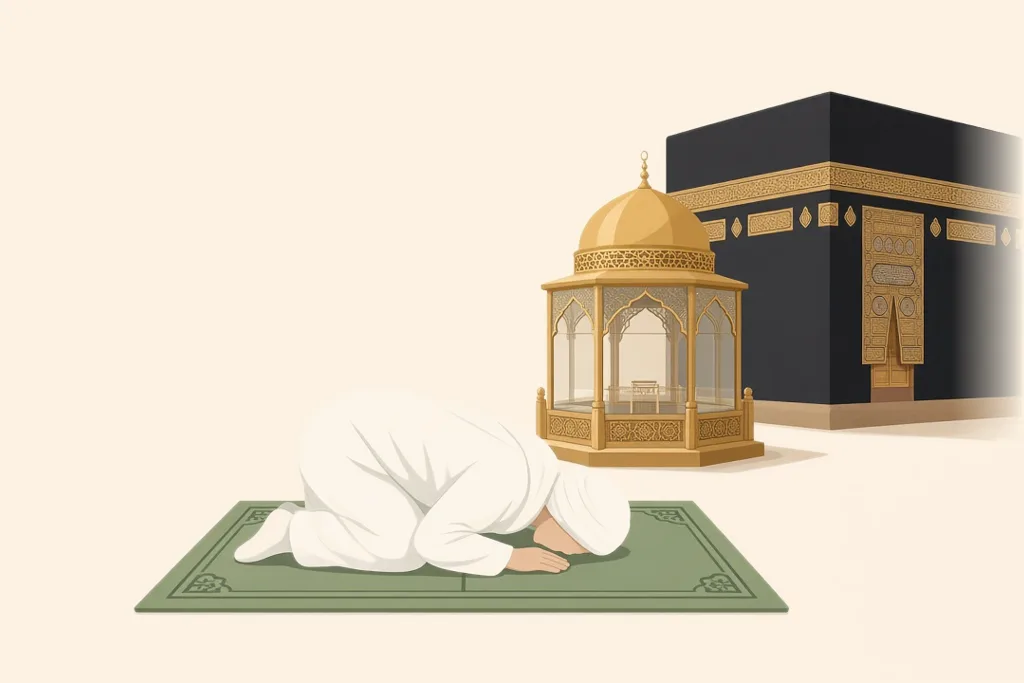
Pray two rakʿāt behind Maqām Ibrāhīm
After the ṭawāf, go towards Maqām Ibrāhīm (the Station of Ibrāhīm) and pray two short rakʿāt behind it, if there is room. If it is crowded, pray them anywhere in the mosque.
Get it right- As you approach, you may recite the verse “And take the Station of Ibrāhīm as a place of prayer.”
- In the first rakʿah, recite Al-Fātiḥah then Surah Al-Kāfirūn (109); in the second, Al-Fātiḥah then Surah Al-Ikhlāṣ (112).
- Do not block the flow of people doing ṭawāf; step back and pray wherever you can.
Say thisوَاتَّخِذُوا مِنْ مَقَامِ إِبْرَاهِيمَ مُصَلًّى
How to say itWattakhidhū min maqāmi Ibrāhīma muṣallā
Meaning“And take the Station of Ibrāhīm as a place of prayer. (Quran 2:125)”
 Step 6 of 9
Drink Zamzam water
Drink from the water of Zamzam, which is available throughout the mosque. The Prophet ﷺ said that Zamzam is for whatever it is drunk for, so drink with an intention and make duʿāʾ.
Get it right- Say “Bismillāh” before drinking, and drink in a few breaths.
- Make any duʿāʾ you wish for this life and the next.
- If you can, return to the Black Stone and touch it once more before heading to Ṣafā.
 Step 7 of 9
Perform saʿī between Ṣafā and Marwah: seven laps
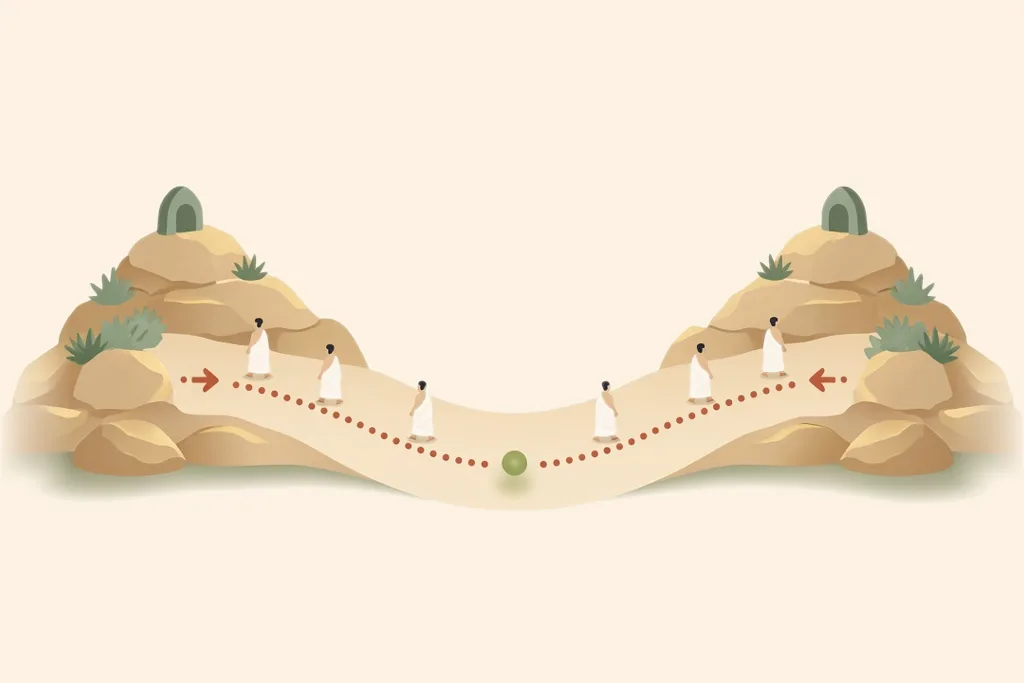
Walk between the hills of Ṣafā and Marwah seven times, remembering Hājar's search for water for her son Ismāʿīl. Start at Ṣafā and finish at Marwah: Ṣafā to Marwah is one lap, and Marwah back to Ṣafā is the second.
Get it right- As you approach Ṣafā for the first time, recite “Inna aṣ-Ṣafā wal-Marwata min shaʿāʾirillāh” and say “I begin with what Allah began with.”
- Climb Ṣafā, face the Kaʿbah, raise your hands, say “Allāhu akbar” three times and the dhikr below, and make duʿāʾ. Repeat this three times.
- Walk towards Marwah. Between the two green lights, men hurry at a light run; women walk at a normal pace.
Show 3 moreShow less
- At Marwah, face the Kaʿbah and repeat the same dhikr and duʿāʾ as at Ṣafā.
- Wuḍūʾ is recommended but not required for saʿī. You may rest, drink, or use a wheelchair if needed.
- The seventh lap ends at Marwah, completing the saʿī.
Say thisإِنَّ الصَّفَا وَالْمَرْوَةَ مِنْ شَعَائِرِ اللَّهِ، أَبْدَأُ بِمَا بَدَأَ اللَّهُ بِهِ
How to say itInna aṣ-Ṣafā wal-Marwata min shaʿāʾirillāh. Abdaʾu bimā badaʾa Allāhu bih
Meaning“Indeed, Ṣafā and Marwah are among the symbols of Allah (Quran 2:158). I begin with what Allah began with.”
Say thisلَا إِلَهَ إِلَّا اللَّهُ وَحْدَهُ لَا شَرِيكَ لَهُ، لَهُ الْمُلْكُ وَلَهُ الْحَمْدُ، وَهُوَ عَلَى كُلِّ شَيْءٍ قَدِيرٌ، لَا إِلَهَ إِلَّا اللَّهُ وَحْدَهُ، أَنْجَزَ وَعْدَهُ، وَنَصَرَ عَبْدَهُ، وَهَزَمَ الْأَحْزَابَ وَحْدَهُ
How to say itLā ilāha illallāhu waḥdahu lā sharīka lah, lahul-mulku wa lahul-ḥamd, wa huwa ʿalā kulli shayʾin qadīr. Lā ilāha illallāhu waḥdah, anjaza waʿdah, wa naṣara ʿabdah, wa hazamal-aḥzāba waḥdah
Meaning“There is no god but Allah alone, without partner. His is the dominion and His is the praise, and He has power over all things. There is no god but Allah alone. He fulfilled His promise, gave victory to His servant, and defeated the confederates alone.”
 Step 8 of 9
Shave or trim the hair (ḥalq or taqṣīr)
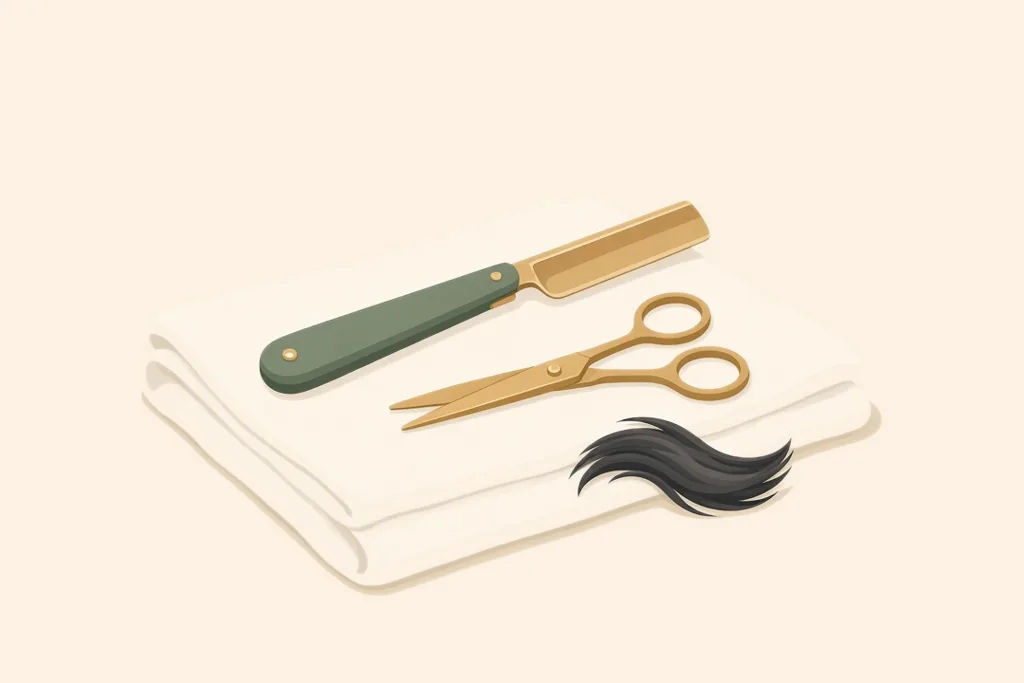
After the saʿī, men either shave the whole head (ḥalq), which is better, or shorten the hair evenly all over (taqṣīr). Women cut a small amount, about a fingertip's length, from the end of their hair.
Get it right- Men: shaving the whole head is the more rewarded option; trimming must cover the whole head, not a few strands.
- Women: gather the hair and cut about a fingertip's length (roughly 2 cm) from the ends, in private.
- Barbers are available near Marwah; you may also cut each other's hair once you have both finished the saʿī.
Show 1 moreShow less
- This act releases you from iḥrām.
 Step 9 of 9
Your ʿUmrah is complete
With the hair shaved or trimmed, your ʿUmrah is complete and all the restrictions of iḥrām are lifted. Thank Allah for allowing you to perform it, and ask Him to accept it.
Get it right- You may now change into normal clothes and resume everything that iḥrām forbade.
- There is no farewell ṭawāf required for ʿUmrah, though many choose to perform voluntary ṭawāf while in Makkah.
- Spend your remaining time in prayer, Quran recitation, and duʿāʾ in the Haram.
That is the whole ʿUmrah
Iḥrām and intention, the Talbiyah, seven circuits of ṭawāf, two rakʿāt, Zamzam, seven laps of saʿī, and shaving or trimming: these are the rites of ʿUmrah. May Allah accept it from you.
Common questions about Umrah
Short answers to the questions pilgrims ask most often.
What is the difference between Umrah and Hajj?
Hajj is obligatory once in a lifetime for every Muslim who is able, and is performed only on set days in the month of Dhul-Ḥijjah. ʿUmrah is a shorter pilgrimage that can be performed at any time of the year and involves iḥrām, ṭawāf, saʿī, and shaving or trimming the hair.
How long does Umrah take?
The rites themselves usually take three to six hours, depending on crowds. Ṭawāf often takes 45 minutes to two hours, and saʿī about one to two hours.
What is forbidden while in iḥrām?
Applying perfume, cutting hair or nails, hunting, marital relations, and getting married or proposing. Men may not wear stitched, fitted clothing or cover their heads; women may not wear a face veil (niqāb) or gloves. Arguing and bad behaviour should be avoided at all times.
What if I lose count of my circuits or laps?
Build on the number you are sure of, which is the lower number. For example, if you are unsure whether you have done three or four circuits, count it as three and continue.
What if my wuḍūʾ breaks during ṭawāf?
Wuḍūʾ is required for ṭawāf according to most scholars. If it breaks, leave, renew your wuḍūʾ, and return. Many scholars say you may continue from where you stopped; others say to restart the ṭawāf.
What do women wear for iḥrām?
Women wear their ordinary loose, modest clothing of any colour, covering the whole body except the face and hands. They do not wear a niqāb or gloves, but may lower a cloth over the face in front of non-related men.
Can a woman perform Umrah during her period?
She can enter iḥrām and make the intention, but she should not perform ṭawāf until her period ends and she has bathed. She then completes the remaining rites as normal.
Do I have to touch or kiss the Black Stone?
No. Kissing or touching it is a sunnah, not a requirement. In crowds it is better to raise your right hand towards it from a distance and say “Allāhu akbar” than to push or harm others.